Blog
Why I Left My Previous Career To Become A Veterinarian – Forbes Advisor
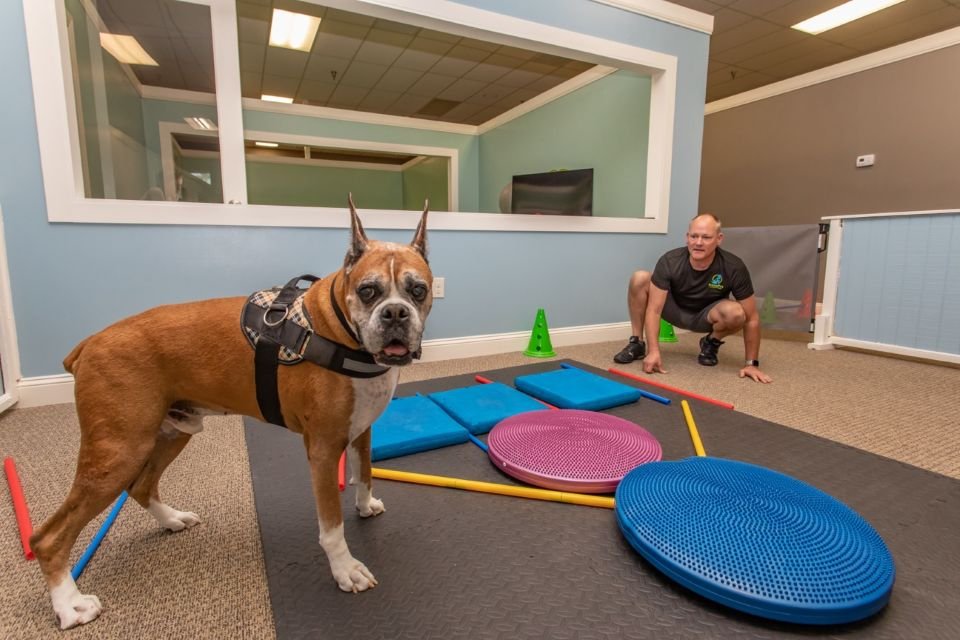
I’m Dr. Tom Walsh, a Forbes Advisor Pet Health Advisory Board member, a small-animal rehabilitation veterinarian and the founder of PrimePet Rehabilitation Therapy in downtown Myrtle Beach, South Carolina.
After roughly 10 years in general veterinary practice, I shifted my focus entirely to rehabilitation and physical therapy. Today our team works primarily with dogs and cats—mostly dogs—to help them recover from orthopedic and soft-tissue surgery; manage neurological conditions, arthritis and age-related mobility loss; and support athletic or working dogs who need to stay sound.
We use an integrative approach that combines therapeutic exercise, manual therapy, hydrotherapy, laser, pulsed electromagnetic field (PEMF), e-stim and owner education. The goal is straightforward: restore comfortable, functional movement so pets can keep living the lives they were meant to live.
But I wasn’t always doing this work.
Featured Partner Offers
Deductible
$100, $250, $500, $750
Reimbursement %
70%, 80%, 90%
Annual Maximum
$5,000, $10,000, $20,000, $50,000, $100,000

Deductible
$300, $500, $700
Reimbursement %
70%, 80%, 90%
Annual Maximum
$5,000, $10,000, $15,000

Deductible
$100, $250, $500, $750, $1,000
Reimbursement %
70%, 80%, 90%
Annual Maximum
$2,500 – Unlimited

My Career Before Becoming a Veterinarian
Before veterinary medicine, I spent about 15 years in telecommunications. It was a successful corporate career that involved traveling, leading teams and working in a fast-paced, results-driven environment.
I liked the problem-solving, the operational challenges and the satisfaction of building and managing complex systems and people. It was solid, well-compensated work that taught me a lot about leadership and how organizations function under pressure.
Even while I was doing well in that world, though, there was always a quiet sense that something more meaningful was missing.
Why I Decided To Change Careers
The pull toward animals had been there most of my life. It wasn’t one single moment or a dramatic event—it was simply always present. As a kid, I was drawn to animals, spent time with them whenever I could and felt a natural sense of calm and purpose around them that I didn’t feel in most other settings. Strangely, many animals I encountered responded with calm, loving behaviors that were hard to explain. That feeling never really went away; it just sat in the background while life moved in other directions.
Through school, early work and then the telecommunications career, the interest stayed quiet but consistent. I always noticed animals, paid attention to how they moved and how they were treated, and felt a strong pull toward them, but life was busy raising a family.
As the years in the corporate world added up—especially the travel, meetings and increasing distance from anything that felt truly meaningful—that background interest in animals started getting harder to ignore. It wasn’t loud at first. It just kept returning. Over time it grew from a quiet preference into a clear recognition that I was spending my energy on work that was successful but not aligned with what actually felt like my work.
By the time I was in my late 30s, the gap between the life I was living and the one that felt right had become obvious enough that staying put no longer made sense. That’s when the decision to go to veterinary school became real. The pull itself didn’t suddenly appear; it had been there the whole time. What changed was that I finally stopped overriding it.
Going to Veterinary School
I decided to go to veterinary school at the age of 40, completed the program and entered practice. Once I was actually working with animals every day, the decision was confirmed. Helping them heal and regain quality of life was the work that actually filled me up. That confirmation has only gotten stronger over the years.
The transition was not smooth or elegant. I left a stable corporate career, returned to school as a nontraditional student and completed veterinary training at a much older age than my classmates. There are financial, logistical and personal adjustments that come with starting over in your 40s. What helped was the same skill set that had served me in telecom: discipline, project management and the willingness to keep showing up when the path felt long.
After graduating, I spent roughly 10 years in general practice. The next transition—into full-time rehabilitation—felt more natural. The Covid-19 pandemic in 2020 created an opening to start PrimePet as a mobile pet rehabilitation service that worked out of empty vet clinics, and that eventually grew into our permanent facility in Myrtle Beach.
Being a Veterinarian Is Deeply Fulfilling
I have never looked back with regret. The career change remains one of the best life decisions I’ve ever made.
I don’t particularly miss the corporate lifestyle, meetings or metrics. What I carried forward from that earlier work—systems thinking, leadership habits and operational discipline—still proves useful in running a specialized practice and collaborating with other clinics and companies.
Being a veterinarian, and specifically a rehabilitation veterinarian, is deeply fulfilling. What I love most is watching an animal that arrived non-weight-bearing or in significant pain walk out stronger, more comfortable and happier, and seeing the relief on the owner’s face. Those moments never get old. Building a practice and an approach that gives pets the time and multimodal care general practice often can’t provide is the daily payoff. I still wake up eager to do this work every day.
About Dr. Tom Walsh
Years in practice
Walsh worked close to a decade in general practice before focusing on small animal rehabilitation.
Education
He graduated with a Doctor of Veterinary Medicine from St. Matthew’s University.
Specialty focus
Walsh focuses primarily on small animal rehabilitation and physical therapy.
Credentials
Walsh is a veterinarian and national speaker at veterinary and technology conferences.