Blog
Spicule Skincare Is the Hottest K-Beauty Trend Right Now, but Dermatologists Say It’s Not What You Think
Dermatologists Say It’s Not What You Think
You have probably seen it all
over your social media feed by now: tiny, invisible needles from
sea sponges that supposedly give you the results of a professional
microneedling session right at home. The promise sounds almost too
good – smoother texture, better product absorption, a
lit-from-within glow, no dermatologist appointment required. But
before you add another step to your already crowded bathroom shelf,
it is worth understanding what these products actually do to your
skin. Because according to dermatologists, the reality is a little
more nuanced than the hype suggests.
What spicules actually are – and why they are everywhere
right now
Korea has given us glass
skin, next-gen SPFs, sheet masks, and toner pads, and
the latest obsession to cross over from K-beauty is spicule
skincare. The concept sounds futuristic, but the ingredient itself
comes straight from nature. Spicules are microscopic, needle-shaped
structures that form part of the internal skeleton of marine
sponges (phylum Porifera), according to Jane Yoo, M.D., M.P.P., a
board-certified dermatologist, Mohs surgeon, and clinical assistant
professor at the Icahn School of Medicine at Mount Sinai. Depending
on the sponge species, these structures are composed of either
biosilica – also known as hydrated silicon dioxide – or calcium
carbonate.
When beauty brands formulate with
them, the spicules are harvested, purified, and ground into a very
fine, uniform particle size before being mixed into serums,
essences, or patches. On an ingredient label, you will usually spot
them listed as “hydrolyzed sponge” or “sponge spicule.” Sabina
Wizemann, Beauty Lab Director at the Good Housekeeping Institute,
notes that while spicules are naturally derived from freshwater or
marine sponge skeletons, synthetic versions also exist. The trend
is frequently marketed as a form of “liquid microneedling,” but Dr.
Yoo considers that label a misnomer – and here is why.
Why this is not the at-home microneedling replacement you
think it is
The critical distinction comes
down to depth. Professional microneedling, whether mechanical or
RF-assisted (RF stands for radiofrequency), penetrates roughly 0.5
to 2.5 millimeters into the skin, reaching the dermis. That depth
is what triggers a wound-healing cascade that stimulates collagen
and elastin production, which is precisely why in-office
microneedling is used to address scarring, deep wrinkles, and
significant textural changes.
Spicules, by contrast, act only
at the epidermal surface. Dr. Yoo explains that they do not reach
the dermis and do not reliably trigger that same collagen-induction
response. She views spicules as an absorption-enhancing exfoliant
rather than a stand-in for in-office collagen induction therapy.
There is also a transparency gap worth noting: with professional
microneedling, practitioners always know the exact needle size
being used. According to Wizemann, the brands she reviewed do not
disclose the average length or diameter of their spicules, nor do
they specify penetration depth – some describe them only in terms
of concentration or overall strength.
So what do spicules actually do
well? Their main benefit is helping other skincare ingredients
penetrate more effectively. The stratum corneum, your skin’s
outermost layer, is designed to keep things out. By creating
temporary microchannels, spicules briefly reduce that barrier
function, giving water-soluble and larger-molecule ingredients like
hyaluronic acid, peptides, growth factors, and PDRN a more direct
path into the upper skin layers. That said, Dr. Yoo cautions that
the large absorption-boost figures some brands cite may be somewhat
exaggerated.
How to use spicules safely – and who should skip them
entirely
If you decide to try a spicule
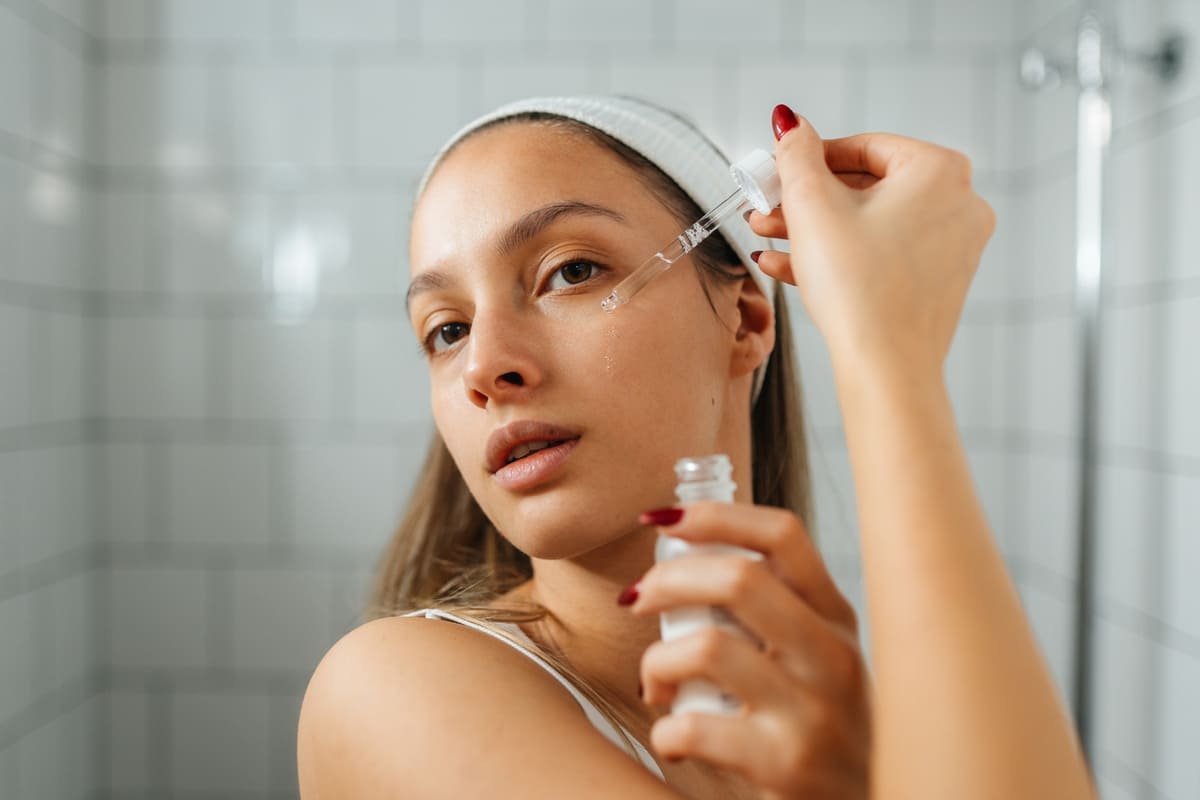
product, application technique matters. Dr. Yoo advises applying to
clean, dry skin using a patting or pressing motion rather than
rubbing vigorously, which helps the spicules work without causing
excessive irritation. Steer clear of the eye area and any broken or
actively irritated skin, and always follow with a soothing serum or
moisturizer.
For frequency, most people should
start at once or twice a week to gauge tolerance, only increasing
to two or three times weekly if the skin handles it well without
persistent redness or sensitivity. One important rule: do not layer
spicules on the same night as retinoids or chemical exfoliants such
as alpha-hydroxy acids (AHAs) or beta-hydroxy acids (BHAs).
Stacking two exfoliating mechanisms at once raises the risk of
irritation significantly.
Feeling a mild tingling or
prickling during the first several seconds to about a minute is
normal and expected – it is simply the rigid micro-structures
physically stimulating nerve endings in the outer layers of your
skin. A brief, controlled prickle is fine, but a burning or sharp
sting that lingers signals actual irritation and means you should
stop. Overuse is a real concern, too. Wizemann explains that
because these tiny particles are foreign to the skin, your body
works to shed and remove them while simultaneously repairing
itself. That repair process is part of why spicule products appear
effective, but doing it too frequently without allowing recovery
time can lead to inflammation, increased sensitivity, and a
compromised protective barrier.
Certain skin types should avoid
spicules altogether. Dr. Yoo recommends that anyone with active
eczema, rosacea, dermatitis, a compromised skin barrier, or active
inflamed acne either skip these products or, at minimum, perform a
patch test and consult a dermatologist first. Sunburned skin and
skin that has recently undergone a laser treatment or chemical peel
should also be off-limits. When shopping, Wizemann suggests looking
at the type of spicules used – such as hydrolyzed spicules – as
well as the concentration, keeping in mind that concentrations are
not standardized across brands. Seeking out complementary proven
ingredients like ceramides, peptides, and niacinamides in the same
formula is also a smart move.
The bottom line on this buzzy K-beauty ingredient
Spicules are a textbook example
of the K-beauty approach: take a clinical concept and translate it
into a gentler at-home format. They can genuinely enhance
exfoliation and help your other products absorb more efficiently,
which is no small thing. But they are not microneedling. Dr. Yoo is
clear that they complement a skincare
routine rather than replace professional treatment when the concern
is scarring or significant structural aging. The evidence base is
still developing, with most human data limited to small studies.
Think of spicules as a clever addition to your regimen – just not
the miracle shortcut social media might have you
believe.