Blog
K-beauty has moved beyond the skin care aisle

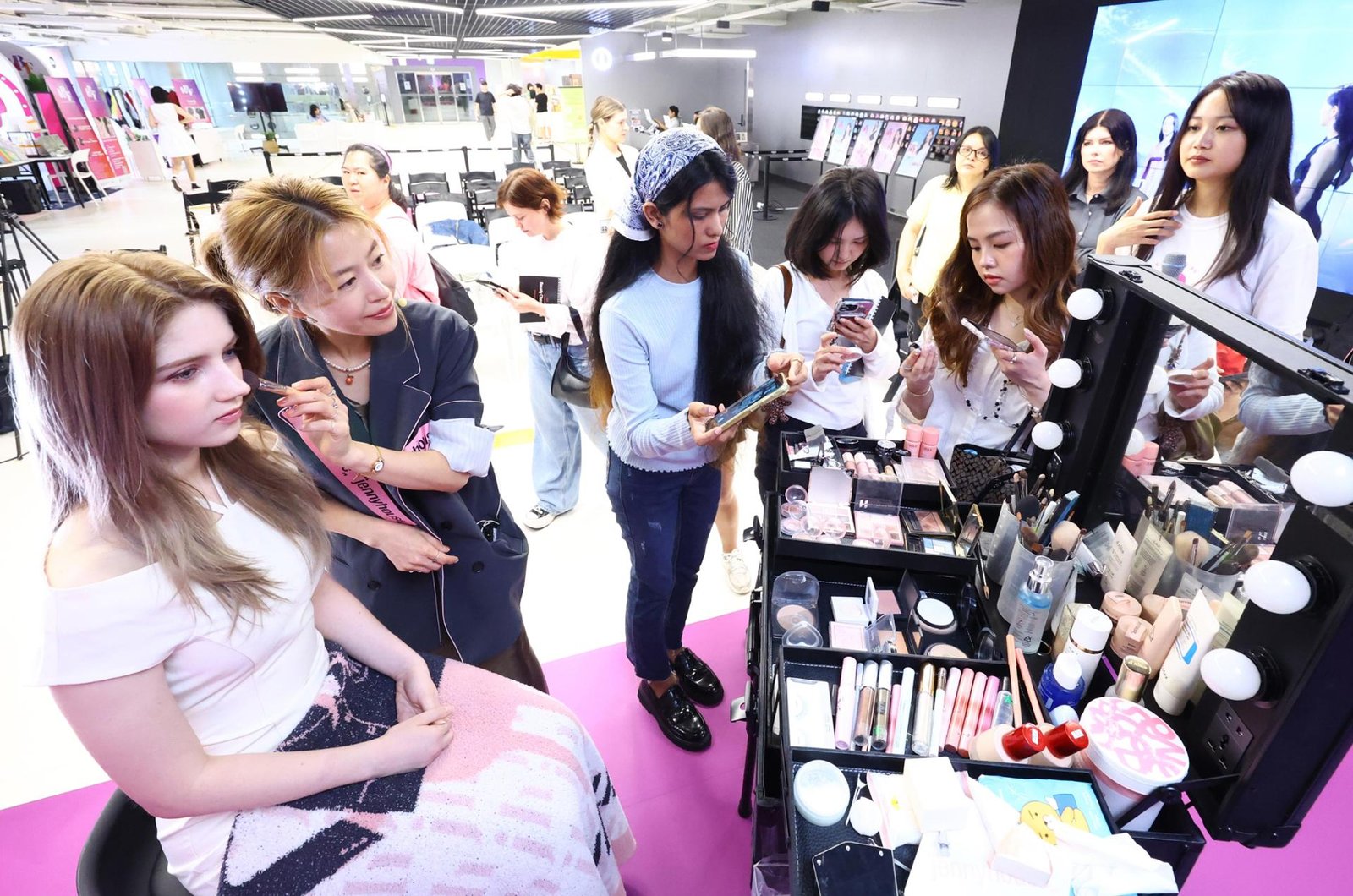
Visitors watch a makeup artist demonstrate makeup techniques during the 2026 Korea Beauty Festival at HiKR Ground in Seoul, June 25. Yonhap
During a recent five-week visit to Korea, one thing became immediately apparent: While consumers overseas continue embracing K-beauty products, many Koreans have already moved on to the next step.
For years, Korea’s beauty industry has been synonymous with sheet masks, BB creams and the famed 10-step skin care routine. Those products helped turn K-beauty into a global phenomenon and cemented the country’s reputation as a beauty powerhouse.
Today, however, the conversation has shifted from cosmetics counters to the country’s ubiquitous dermatology clinics, where aesthetic treatments have become part of everyday beauty routines. Scheduling a laser treatment or skin booster has become almost as routine as booking a haircut or nail appointment.
Beauty in Korea is increasingly treated less like a luxury and more like maintenance. Instead of asking which moisturizer someone uses, friends compare lifting treatments, collagen-boosting procedures, skin booster injections and pore treatments. Recommendations for clinics are exchanged as casually as restaurant tips, while discussions about the latest aesthetic devices have become commonplace among women, and increasingly men, across generations.
The conversations can be remarkably technical. It has become common to hear nonmedical professionals debating the merits of Ulthera versus Thermage, or whether Oligio delivers better value than Shurink, complete with explanations about ultrasound versus radiofrequency technology, collagen stimulation and treatment depth. For anyone unfamiliar with aesthetic medicine, keeping up with the conversation can feel like attending a dermatology conference.
Terms such as “collagen,” “tightening” and “lifting” now dominate conversations that once centered on double eyelid surgery or jawline reshaping. The emphasis has shifted from correction to prevention.

Signs for plastic surgery and dermatology clinics crowd the facade of a building near Sinsa Station in Gangnam District, Seoul. Korea Times photo by Hong In-kee
One reason is accessibility. Cosmetic dermatology in Korea is abundant, affordable and deeply woven into everyday life. Treatments that might be considered occasional splurges elsewhere are accessible enough for many consumers to schedule every few months, helping normalize aesthetic medicine as part of a regular beauty routine. The affordability has also helped turn Korea into a destination for overseas visitors seeking cosmetic treatments.
The same accessibility extends beyond dermatology. Cosmetic surgery clinics are equally commonplace, with consultations easy to book and procedures far more accessible than in many other countries. While plastic surgery has long been associated with Korea, it is now discussed alongside routine dermatology treatments as just another option on a broad aesthetic menu.
In neighborhoods such as Gangnam and Apgujeong, entire buildings are devoted to dermatology clinics. Lunchtime appointments are common, allowing office workers to fit a treatment into the middle of the workday before returning to work.
Even a routine visit to a dermatology clinic revealed how much the industry has evolved. Rather than recommending a single procedure, consultations often begin with a menu of treatment combinations, package discounts and maintenance schedules designed to bring patients back every few months.
Instead of promoting one-time procedures, clinics market memberships and recurring treatment plans. Patients return every few months for another laser session or collagen treatment, much like scheduling regular dental cleanings or hair appointments.
While dermatologists caution that not every procedure is backed by the same level of scientific evidence, the broader shift toward routine aesthetic maintenance is difficult to miss.
Korea may still be best known for exporting skin care products, but K-beauty itself appears to be evolving. Long built on the idea that beauty is a routine rather than a one-time fix, its philosophy hasn’t changed. But now the routine extends beyond the skin care aisle.